
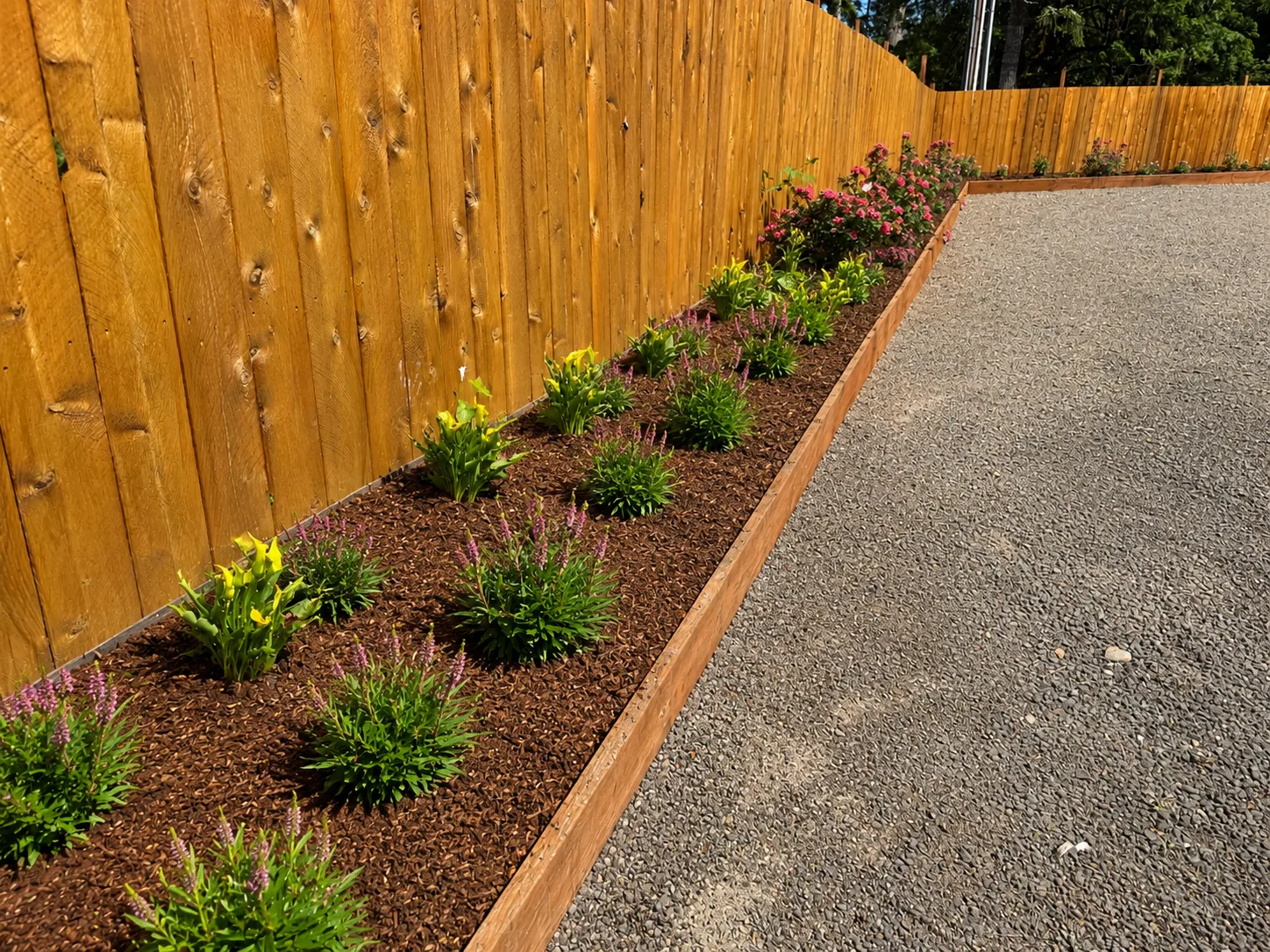
Plan the yard as a whole
Sketch the lawn, beds, paths, irrigation and sitting areas before stripping anything. Note sun, shade, wet ground, access and the mature size of plants. Keep useful existing plants and soil where possible. A small layout change can reduce mowing, simplify watering and improve access.
Renovate in a sensible order
- Record and protect. Photograph the starting yard, mark utilities and protect plants being retained. Decide where machines and material deliveries can travel.
- Remove unwanted growth. Clear weeds, roots and debris; identify spreading weeds before tilling them into the bed. Repeated control may be needed.
- Fix drainage and rough grading. Establish the finished levels before adding expensive soil, edging or plants. Keep soil below siding and preserve required clearances.
- Assess the soil. Check texture, rooting depth and drainage; test nutrients and pH. Reuse good soil. Add compost or topsoil only where it solves an identified need.
- Install buried work. Place drainage, irrigation and sleeves under future paths before finishing the landscape. Photograph and measure the routes.
- Finish grade and plant. Smooth transitions, install edging and space plants for mature growth. Use our separate planting and new-lawn guides.
- Mulch and water. Cover bare beds appropriately, keep stems clear and water the root zone. Set an establishment schedule rather than leaving the same timer all year.
Use a power rake to preserve good soil
A power rake can loosen surface soil, break up clods and gather some stones and old turf into windrows. We can remove that debris while keeping usable soil on site. Heavy sod may need stripping first. Do not work saturated clay: it can smear, compact and dry into hard clods. The rake conditions the surface; it does not fix deep compaction or underground drainage by itself.
Bark and mulch: depth matters
For many ornamental beds, about 2–3 inches of wood mulch is a useful starting depth. Keep it clear of trunks, plant crowns, vents and siding. Check the mulch already present before adding more; the target is total depth, not another full layer every year. Fine bark, coarse chips and groundcovers behave differently, so adjust to the planting.
For example, a 20 × 10-foot bed at 3 inches deep takes about 1.85 cubic yards before any allowance. Bark is usually ordered by cubic yard. Its weight changes with moisture and product.
Use your own measurements and adjust the product assumptions before ordering.
Open the materials calculator →Keep the new landscape healthy
- Pull small weeds before they seed and before their roots spread through the bed.
- Check drip emitters and root-ball moisture, especially during the first dry season.
- Top up thin mulch areas instead of burying plants beneath a fresh thick blanket.
- Inspect drainage after storms and keep soil and mulch out of catch basins.
Continue with planting trees and shrubs, new lawns or seasonal lawn maintenance.
Further reading & product instructions
Residential resources used for these explanations. Follow the instructions for the product you actually choose.