
Renovate or start over?
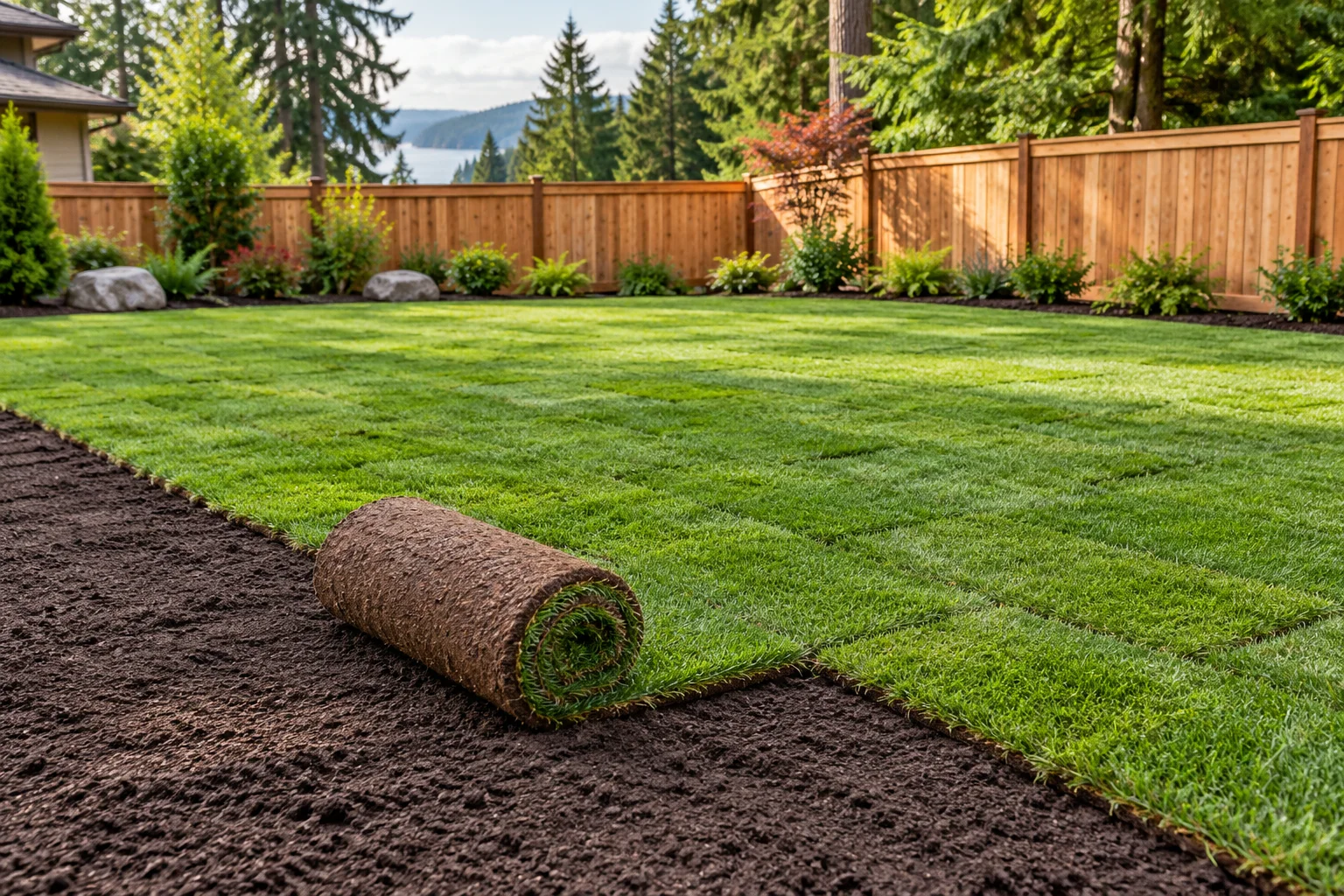
If most of the lawn is healthy, aerating, overseeding and correcting watering may be enough. Start over when grading is poor, weeds dominate or drainage and soil need major work. First solve the reason the old lawn struggled; new seed alone will not fix standing water or deep shade.
Prepare the ground
- Choose the right season and grass. For Western Washington, spring or early fall often gives cool-season grass a better start than summer heat. Choose a locally suitable seed or sod for the available sun and use.
- Remove unwanted turf and weeds. Use a sod cutter, appropriate equipment or an approved weed-control approach. Collect debris and plan follow-up for persistent weeds.
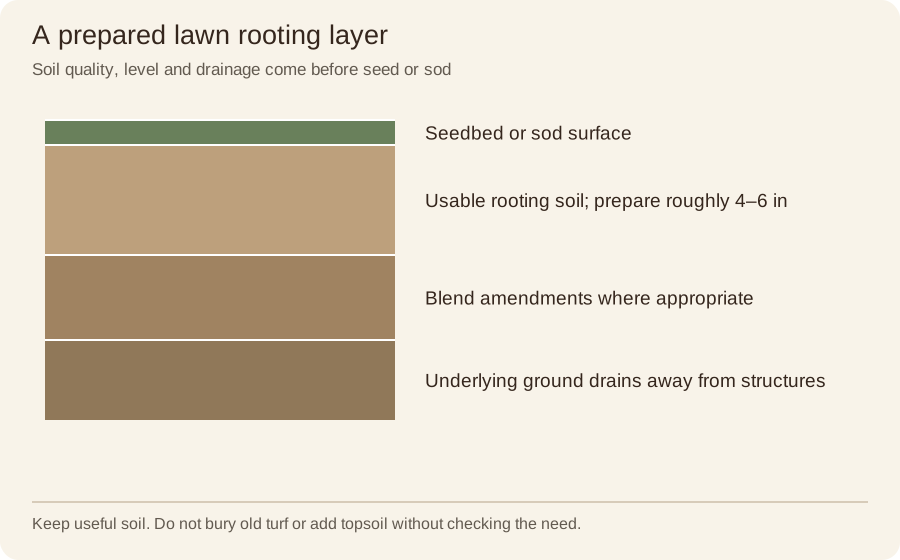
- Keep useful soil. Our power rake can help work the surface, separate debris and prepare the finish while retaining good soil. New topsoil is only needed where existing depth or quality is inadequate.
- Correct levels and drainage. Rough-grade before final preparation. Keep finished soil lower than paths by the thickness of the sod where sod is used; avoid low pockets against buildings.
- Prepare the rooting layer. Where suitable, loosen roughly the upper 4–6 inches and blend recommended amendments. Avoid a thin imported layer over a hard, sealed surface. Do not cultivate through tree roots or unlocated lines.
- Rake and lightly firm. Remove stones and clods, smooth dips and settle the surface enough to limit footprints without compacting it like a driveway. Follow soil-test results for lime or nutrients.
If you choose seed
- Measure and buy by the label rate. New-lawn and overseeding rates differ. Split the seed into two portions and spread in crossing directions for more even coverage.
- Make soil contact. Rake lightly to the seed supplier’s specified depth and lightly roll if recommended. Do not bury small grass seed under inches of soil or mulch.
- Keep the surface consistently moist. Use gentle, short watering cycles during germination, adjusted for rain and wind. Avoid puddles and runoff that move seed.
- Change the schedule as roots grow. Gradually water more deeply and less often. Begin mowing when the grass is tall and rooted enough for the selected mix; use a sharp blade and remove no more than one-third.
If you choose sod
- Have the soil ready before delivery. Install promptly; stacked sod heats and dries. Start against a straight edge.
- Stagger the joints. Butt the strips together without gaps or overlaps. Trim edges and use appropriately sized pieces at borders.
- Seat and water. Lightly roll if the grower recommends it. Water immediately and lift a corner to check that moisture reached the soil below.
- Protect establishment. Keep it moist without saturation and minimize traffic until rooted. Test gently for root attachment before the first mow; then transition to an established-lawn schedule.
What to order
Measure lawn area in square feet. Order seed at the selected bag’s new-lawn rate; order sod by coverage, allowing for cuts. Estimate only the topsoil or compost actually needed. Keep those quantities separate from structural fill.
Use your own measurements and adjust the product assumptions before ordering.
Open the materials calculator →After establishment, use our season-by-season lawn maintenance guide. New seed and sod need different watering from an established lawn.
Further reading & product instructions
Residential resources used for these explanations. Follow the instructions for the product you actually choose.