
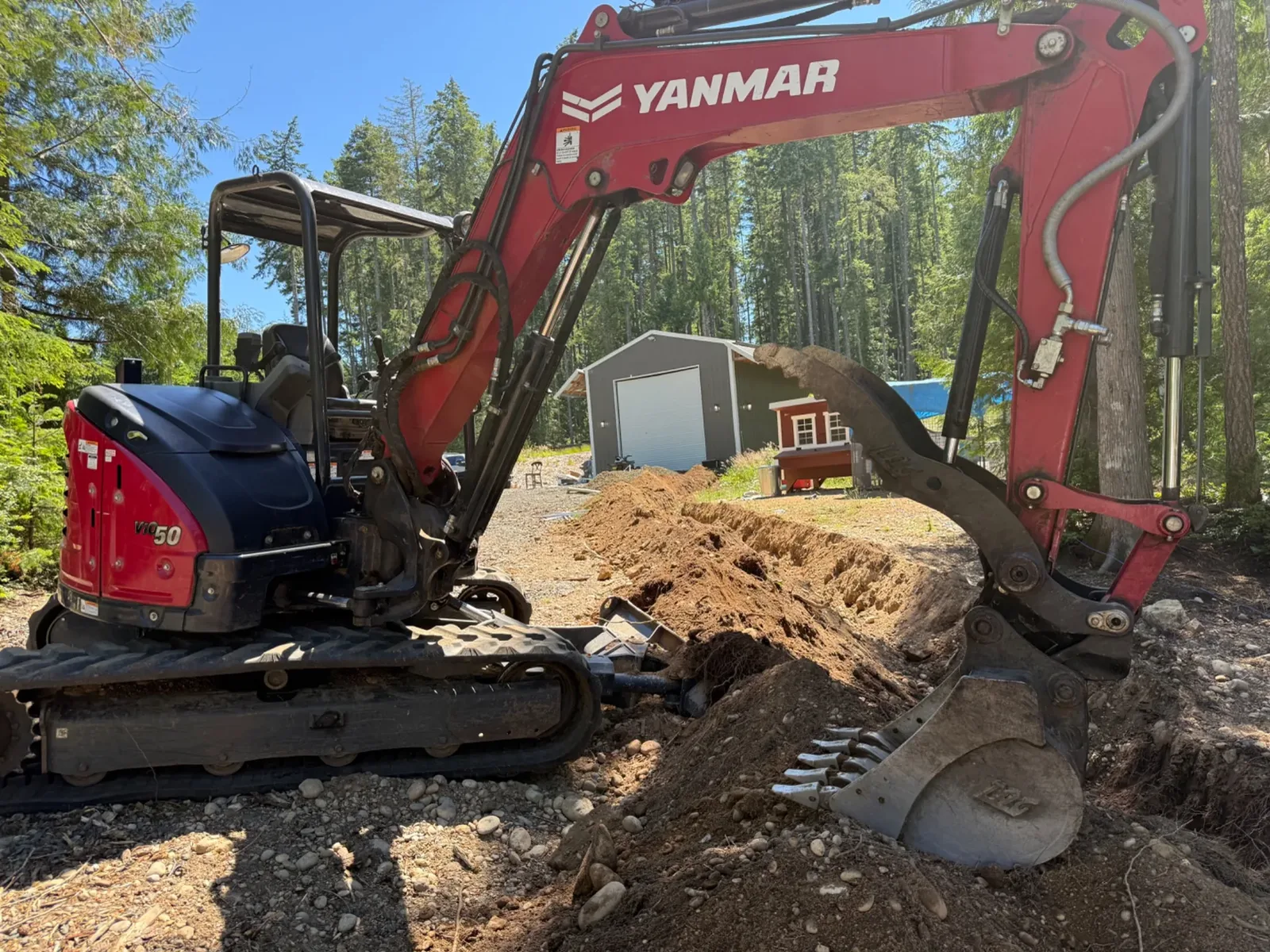
First, identify the source
- Watch a storm. Note whether water runs over the surface, comes from a roof pipe or seeps out of the ground. Photograph the route and how long puddles remain.
- Check elevations. A drain needs a lower destination or a suitable designed infiltration area. A level-looking yard can hide a low point against the house.
- Choose the outlet before the inlet. Confirm permission for the discharge location. Do not send runoff onto a neighbor, septic drainfield, unstable slope or public road.
- Locate services and protect foundations. Use 811 and private locates. Excavating beside footings or a retaining wall can undermine them; get a suitable plan first.
Match the fix to the problem
| Problem | Often useful | Watch for |
|---|---|---|
| Water flows across a lawn or drive | Shallow swale or side ditch | A clear outlet, gentle mowable slopes and erosion protection. |
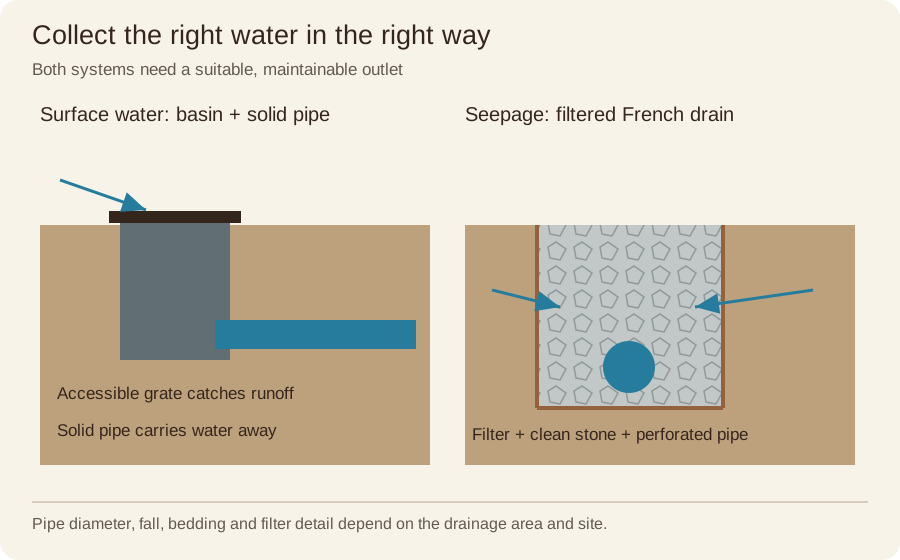
| Water sits at a surface low point | Catch basin with solid outlet pipe | Leaves and sediment need cleaning; set the grate to collect flow. |
| Ground stays wet from seepage | Filtered stone trench with perforated pipe (French drain) | It must intercept the wet layer and drain somewhere suitable. |
| Roof water collects near the house | Solid downspout drain to an approved outlet | Do not dump roof flow into a wall’s small footing/toe drain. |
Build a simple yard drainage run
- Lay out the inlet and pipe. Measure the run, elevation change and connections. Select pipe size for the drainage area and expected flow—not simply because a 4-inch pipe is common.
- Excavate and form the bedding. Keep a steady fall without humps or dips. As an arithmetic example, 1% fall is 1.2 inches over 10 feet; select the actual slope for the system and outlet.
- Install the correct collection detail. Use a basin and solid pipe for surface runoff. For a French drain, use specified filter fabric, clean drainage stone and perforated pipe oriented per its manufacturer.
- Provide maintenance access. Include accessible cleanouts and removable grates. Keep joints secure and protect outlets against erosion and pests without blocking flow.
- Test before covering. Run water, inspect joints and check discharge. Backfill as specified and finish the surface so it feeds the inlet rather than bypassing it.
Ditches need maintenance too
Keep grass established in gentle swales and remove blockages. Rock lining must suit the water speed; a thin sprinkle of gravel can wash away. Avoid digging a deep narrow ditch next to a driveway shoulder. If the problem involves a creek, a road culvert, a spring or recurring water under a house, plan the whole drainage system before digging.
Estimate drainage stone by trench length, width and depth
Use your own measurements and adjust the product assumptions before ordering.
Open the materials calculator →Common mistakes
- Installing a pipe without a usable outlet.
- Using perforated pipe where water should be carried away without leaking.
- Filling a stone drain with silty material or placing soil directly into open rock voids.
- Covering the work before checking slope and flow.
- Assuming a dry well will work in saturated or poorly draining soil.
Further reading & product instructions
Residential resources used for these explanations. Follow the instructions for the product you actually choose.