
Make a simple site plan
Mark the proposed shed, greenhouse, path, gate swing and driveway. Add utilities, septic areas, property boundaries and trees. Walk through the intended movements: a mower, wheelbarrow, trailer and delivery truck need different widths and turning room.
Gravel shed and greenhouse pads
- Get the structure requirements. The shed supplier or building plan determines supports, anchoring, ventilation and pad dimensions. A gravel pad does not automatically replace required footings.
- Choose a well-drained position. Divert uphill runoff and keep the pad out of drainage channels. Confirm the surface will not send water toward a neighbor or house.
- Remove organic material. Strip sod and unsuitable soil. Check support and use separation fabric where appropriate.
- Build in compacted layers. Select base and surface material for the load and foundation type. Keep the specified level or slope; a building support may need level bearing while surrounding ground drains away.
- Finish the edges and access. Contain the aggregate and provide a path or ramp that does not trap water at the door.
Paths and work areas
Use the paver guide for paved walks or the driveway guide for loaded gravel areas. A decorative loose-gravel path needs containment and a suitable walking surface; rounded stones can roll under feet and wheels. Choose the section for the actual use, not just its appearance.
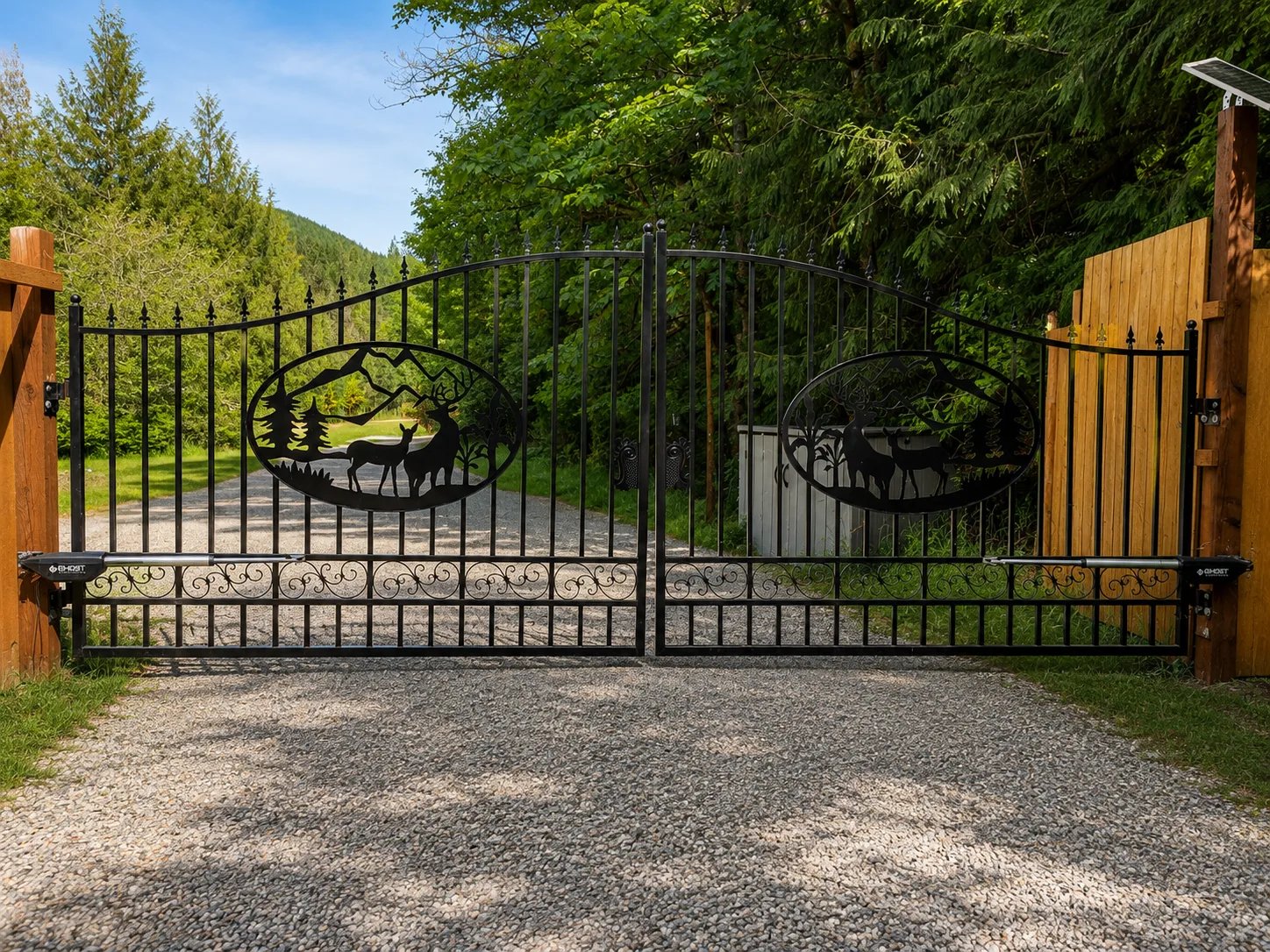
Gate and trailer access
- Confirm the legal location. Check the surveyed boundary, easement and road approach requirements before setting posts.
- Measure the whole vehicle movement. Allow mirrors, trailer off-tracking, turning and safe stopping space outside traffic. Gate width alone does not guarantee access.
- Check the ground under the swing. A rising driveway can stop a gate from opening. Consider slide hardware or another layout if necessary.
- Coordinate posts and drainage. Avoid burying posts into drain lines or blocking a ditch. Post and footing sizes follow gate load, soil and the hardware system.
Do buried work before finishing
Install drainage, conduit and irrigation sleeves before a new path or slab goes down. Stockpile topsoil separately and preserve access for deliveries until heavy work ends. Finish soil, seed and planting last.
Use your own measurements and adjust the product assumptions before ordering.
Open the materials calculator →Compare estimates fairly
Ask for dimensions, finished depths, edge details, disposal, compaction and delivery quantities. Allow for unsuitable soil as a clearly priced change rather than an unexplained surprise. Photograph buried work and keep a record of its route.
Further reading & product instructions
Residential resources used for these explanations. Follow the instructions for the product you actually choose.