
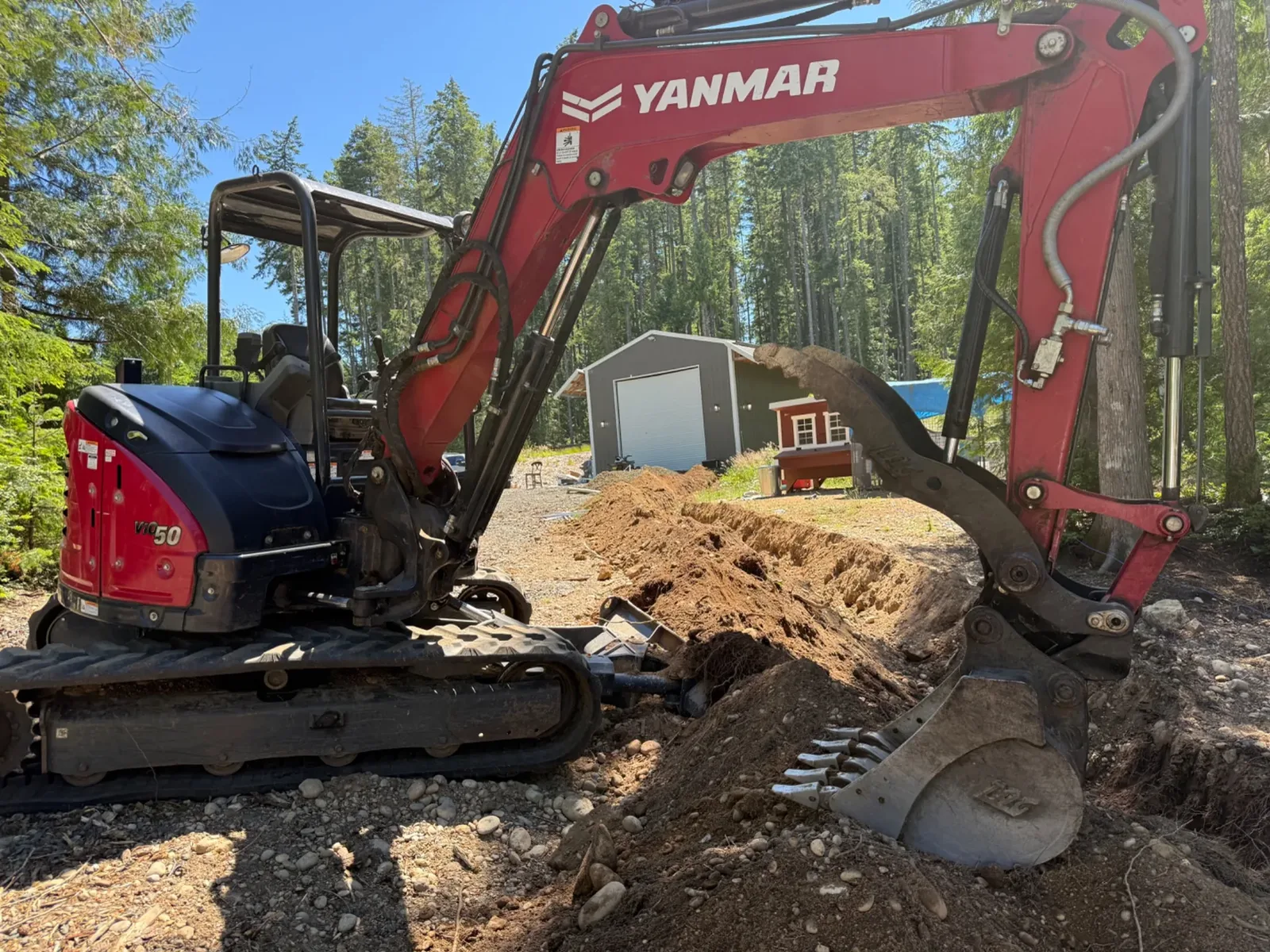
Use 811 even for a small residential job
Tree planting, fence posts, drainage, irrigation and grading can all reach buried services. Washington’s 811 locate request is free. It notifies participating utility operators so they can mark their facilities in the requested work area.
Before the shovel or machine starts
- Define the work area. Mark the proposed excavation in white as instructed and describe the location and type of work accurately.
- Submit the request. Call 811 or use WA 811’s homeowner request system. In Washington, give at least two and no more than ten full business days’ notice, excluding the request day, weekends and holidays; follow the ticket’s allowed start time.
- Check every response. Confirm each notified operator has marked or cleared the area before digging. No paint does not automatically mean no utility. Ask about missing or unclear responses.
- Arrange private locates. Irrigation, septic lines, propane, well lines and electric lines to a detached building may not be covered by the utility-owned locate. Determine ownership and hire a private locator where needed.
- Protect the marks and expose carefully. Preserve flags/paint, request re-marking when needed and use the required safe exposure method near utilities. Stop if actual conditions differ from the markings.
What the two-foot zone means
Washington uses a tolerance area extending 24 inches beyond each outside edge of the marked utility. Include the facility’s marked width; do not simply measure from one painted centerline and call everything beyond it safe. Marks show approximate horizontal location, not depth.
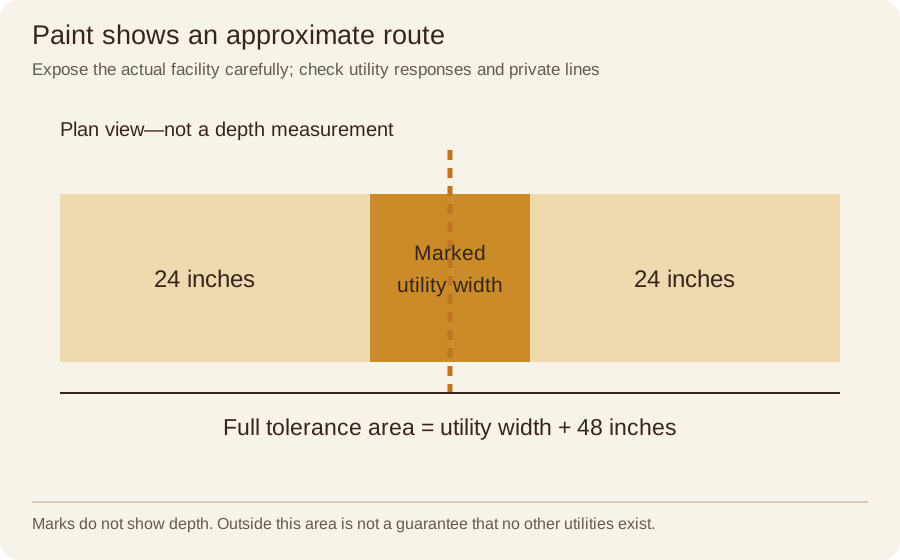
Use careful hand excavation or an appropriate non-destructive method to positively locate the facility before mechanized work near it. Follow the operator’s requirements and current WA safe-digging guidance. Being outside the painted tolerance area does not prove private or unmarked lines are absent.
Common mark colors
| Color | Typical meaning |
|---|---|
| White | Proposed excavation |
| Red | Electric |
| Yellow | Gas, oil or steam |
| Orange | Communications |
| Blue | Potable water |
| Green | Sewer or drain |
| Purple | Reclaimed water or irrigation |
| Pink | Temporary survey markings |
Color alone does not identify ownership or exact size; read the markings and ticket information.
If a line is damaged
Stop work. Keep people away and notify the facility operator and 811, even if damage looks minor. If there is a gas smell, escaping gas, arcing or immediate danger, move to a safe location and call 911. Do not try to repair a utility, cover damage or operate switches near a suspected gas leak.
Further reading & product instructions
Residential resources used for these explanations. Follow the instructions for the product you actually choose.